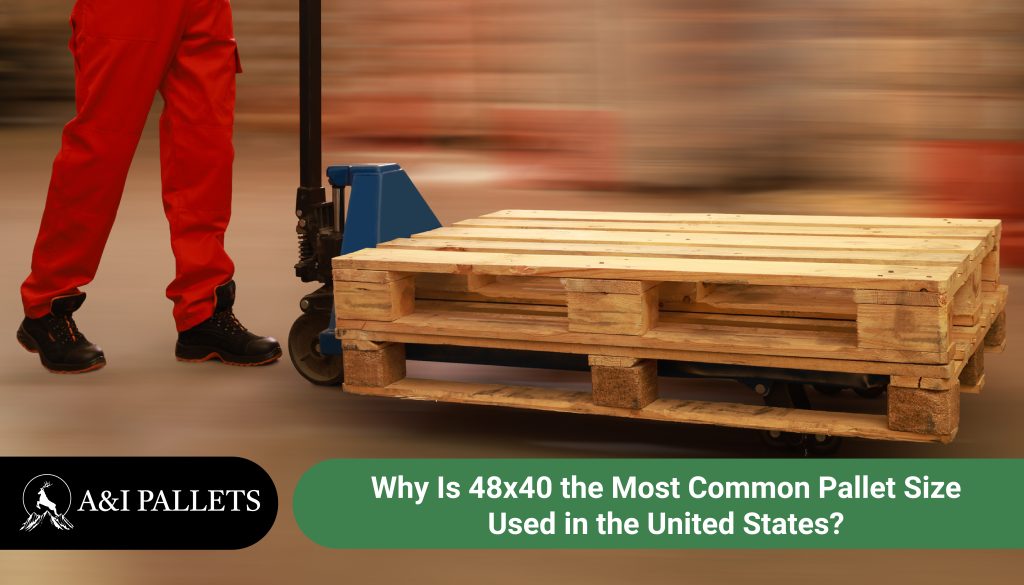
Why Is 48×40 the Most Common Pallet Size Used in the United States?
The 48×40-inch pallet has become one of the most widely used pallet footprints in the United States because it works efficiently across transportation, warehousing, distribution, manufacturing, and retail operations. Its dimensions are familiar throughout the supply chain and compatible with many established material-handling systems. For companies looking for reusable options, standard 48×40 & block-style plastic pallets bring that familiar footprint to a durable plastic design. Businesses searching for standard 48×40 & block-style plastic pallets for sale should look beyond dimensions alone. Load capacity, deck design, forklift access, racking requirements, storage conditions, handling machinery, and expected reuse can all determine which pallet is appropriate for an operation. Standard 48×40 & Block-Style Plastic Pallets A block-style pallet uses blocks between its upper and lower sections to create access for material-handling equipment. Many designs provide four-way entry, allowing forklifts or compatible pallet jacks to approach from multiple directions. Plastic construction can be useful for operations that value consistent dimensions, moisture resistance, repeat use, and cleanable surfaces. Molded construction can also provide uniformity from pallet to pallet, an important consideration for facilities that depend on predictable material flow. The correct design still depends on how the pallet will actually be used. A pallet moving packaged products through a distribution center can have different requirements from one supporting heavy industrial goods. Why 48×40 Fits Trailers, Containers, and Forklifts Alike Standardization makes logistics easier. The 48×40 footprint has become deeply established throughout U.S. material handling. Warehouses, trailers, loading areas, forklifts, pallet jacks, conveyors, and storage systems frequently operate around commonly used pallet dimensions. That compatibility helps products move between manufacturers, carriers, warehouses, distributors, and retailers without requiring a different pallet at every stage. Standard 48×40 & block-style plastic pallets can be especially practical for companies moving products repeatedly through established distribution networks because both employees and equipment are accustomed to working with the footprint. Compatibility with Standard Racking Systems Pallet dimensions alone do not determine whether a pallet belongs in a rack. Businesses need to evaluate the specific pallet’s racking capacity, design, reinforcement, support requirements, product weight, and weight distribution. The warehouse’s rack configuration matters as well. Before selecting pallets for a racked environment, consider: Static Load Requirements Dynamic Load Requirements Racking Load Requirements Rack Configuration Product Weight Weight Distribution Forklift Access Pallet Jack Access Storage Conditions Consistency becomes particularly valuable for larger facilities. When pallet dimensions and specifications remain predictable, warehouse teams can plan storage and material movement with fewer variables. Why Major Retailers Require or Prefer This Size Large retail and distribution systems depend heavily on standardization. Common pallet dimensions make receiving, storage, transportation, and product movement easier to coordinate across multiple facilities. The 48×40 footprint has become familiar throughout many of these systems. However, a standard footprint does not mean every 48×40 pallet will satisfy every retailer. Individual businesses may establish requirements involving construction, material, condition, deck design, load capacity, cleanliness, or other characteristics. Companies shipping into a particular retail or distribution network should confirm the recipient’s requirements before purchasing pallets. Businesses comparing standard 48×40 & block-style plastic pallets for sale should therefore consider where the loaded pallets are going, not simply where they begin their journey. How Much Weight a Standard 48×40 Pallet Can Handle There is no universal weight capacity for a 48×40 pallet. Capacity varies according to construction, plastic material, deck design, reinforcement, support conditions, temperature, and how the pallet is being used. Three ratings are particularly important: Static Capacity – Weight Supported while the Pallet Is Stationary Dynamic Capacity – Weight Supported while the Pallet Is Being Moved Racking Capacity – Weight Supported in an Appropriate Rack A heavy-duty reusable pallet can have very different specifications from a lightweight pallet intended primarily for transportation. Load distribution also matters. A concentrated load can place different stresses on a pallet than the same total weight distributed evenly across its surface. Block-Style vs. Nestable: Two Ways to Build the Same Standard Size Two pallets can share the same exterior dimensions and still function very differently. Block-style designs can provide a substantial platform for repeated material handling, storage, and distribution. Depending on the particular model, they may offer four-way entry and features suited to repeated warehouse use. Nestable pallets are designed so empty units fit partially inside one another. This can reduce the amount of space required for empty pallet storage and return transportation. Companies should compare these designs according to their complete pallet cycle. Receiving, storage, loaded transportation, unloading, empty storage, and return logistics can all influence which configuration provides the better operational fit. New, Premium, and Used 48×40 Plastic Pallets Pallet condition and construction should reflect the application. Premium plastic pallets may be appropriate for companies that require dependable repeated use, specific performance characteristics, or consistency across a large pallet pool. Used standard 48×40 & block-style plastic pallets for sale can provide another purchasing option when available inventory meets the operation’s requirements for condition, design, load capacity, and intended use. For larger orders, consistency across the pallet supply can be particularly important. Pallets that appear similar may have different specifications, so buyers should understand what they are purchasing rather than relying on dimensions alone. When a Custom Size Actually Makes More Sense Standard dimensions solve many material-handling problems, but not all of them. Custom Plastic Pallets can make sense for oversized products, unusual dimensions, specialized equipment, concentrated loads, or manufacturing processes that do not align well with the standard footprint. Custom pallet planning can consider: Product Dimensions Load Capacity Weight Distribution Deck Configuration Forklift Access Pallet Jack Access Racking Requirements Handling Machinery Transportation Conditions Storage Environment Customization should solve a specific operational problem. If the standard footprint already works efficiently with the product and equipment, there may be little reason to move away from it. Why A&I Pallets Stocks 48×40 as Its Default Option The 48×40 footprint serves a broad range of manufacturers, warehouses, retailers, distributors, logistics operations, government programs, contractors, and commercial businesses. A&I Pallets supplies standard 48×40 & block-style plastic pallets for customers that need a widely used …
Why Is 48×40 the Most Common Pallet Size Used in the United States? Read More »